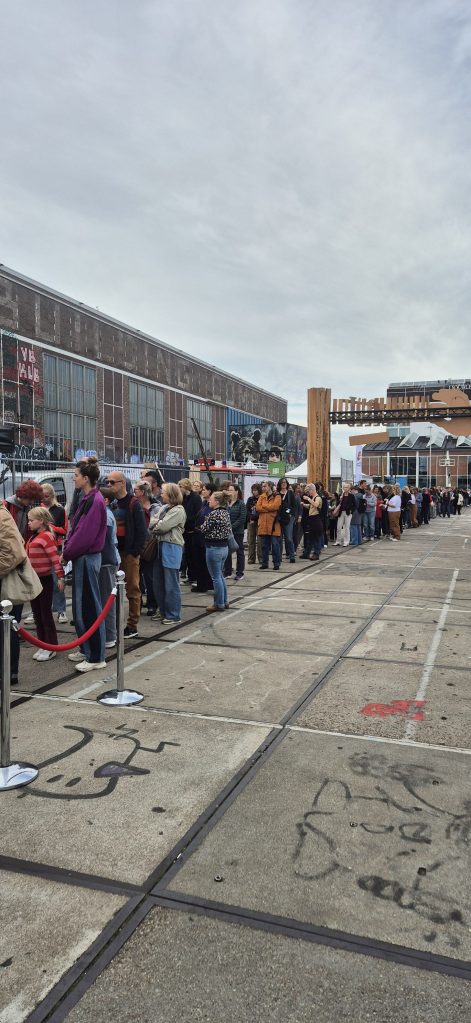
This line is not for a pop star. This was 10 minutes before the opening of the first day of the Ambacht in beeld festival in the NSDM loods in Amsterdam Noord.
I grew up in a house where not having done something before meant you could probably do it. (Yes, you can make two giraffe piñatas by tomorrow.) Working with my hands paid for my university degree, one novelty cupcake at a time. So when the opportunity came up to accompany Curaçao’s own artisan extraordinaire, Felix Ettienne, to this event, I jumped on it.
I’ve been part of Farm to Crafts since its start in 2023, as its regenerative farming specialist. Curaçao imports about 95% of its food, and our farmers work under tough climatic conditions and unfair prices. Farm to Crafts looks for “non-food” value in agriculture: turning residual products from crops already grown, like banana and coconut fibers, into raw material for local crafts. The result is new income streams for farmers, new materials for makers, and connections between sectors that rarely work together. It’s also about our history. Crafts like hat plaiting once thrived here, and colonial exploitation and the legacy of slavery shaped how farming and handwork are still seen today. Through learning by doing, Farm to Crafts reconnects people with those skills and that story.
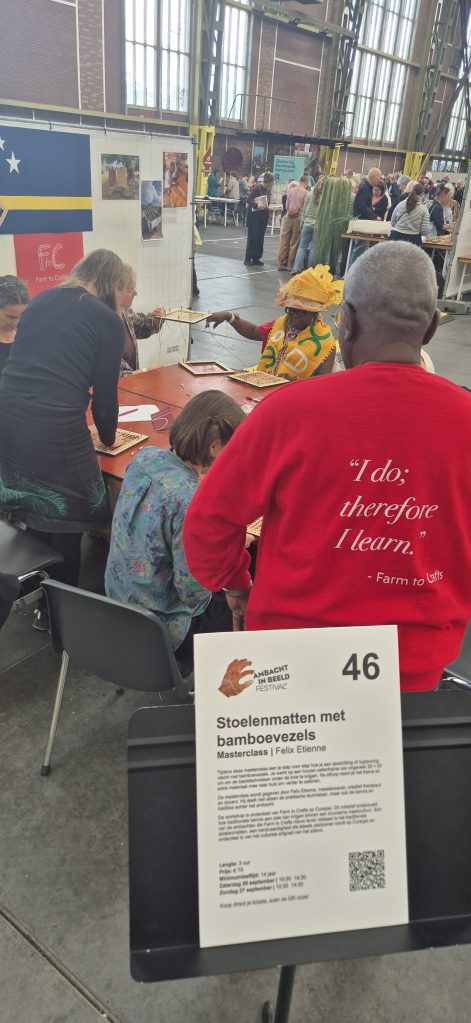
Felix is one of the few people on the island who works with whatever material is at hand and creates beauty from almost nothing, using knowledge passed down through generations. On our island, makers like him are becoming rare.
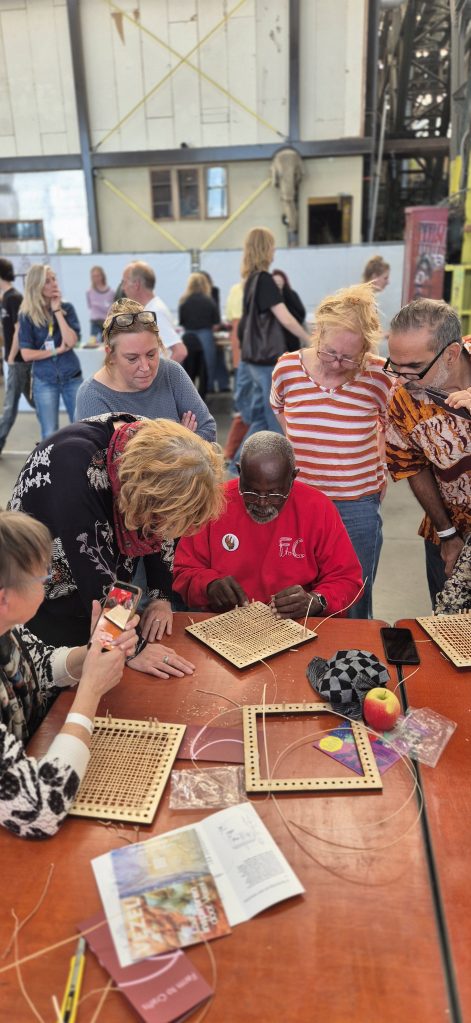
So I was more than pleasantly surprised to find that craftsmanship is alive and kicking, and that the interest was overwhelming. The stained-glass stand across from us told us her workshops sold out in two minutes. Young and not so young, beginners, hobbyists and experts, every gender: they all showed up to create and share knowledge together.
Our chair-caning workshop was busy, and as usual, someone brought along a chair found on the curb on trash day, which had inspired its new owner to learn how to repair it. In today’s throwaway culture, that’s rare. These are my kind of people: people who reduce, reuse and repurpose by creating something with their own hands.
This festival reminded me that makers are universal, that creating is human, and that however small our projects, their reach is real.