154 participants. 9,300+ observations. One island. Four days.
Despite an island-wide drought putting extra pressure on local ecosystems, Curaçao’s second City Nature Challenge wrapped up with results that surprised even its organizers. From April 24–27, 154 participants grabbed their phones, headed outside, and collectively logged more than 9,300 nature observations via the free app iNaturalist — documenting over 1,000 different species.
That’s nearly as many species as last year. During a drought. We’ll take it.
What makes these numbers remarkable
A lot of citizen science events generate observations that sit in a database, unverified and unused. Not here. Of all the observations submitted during this year’s Challenge, 83% reached “research grade” — meaning they were verified by the global iNaturalist community and are now available for actual scientific research.
The global average? Around 40%.
That gap is no accident. It reflects the hard work of specialists who know Curaçao’s species — and who spent time reviewing and confirming what participants photographed. Thanks to their efforts, Curaçao ended up in the top 11% of all participating cities and regions worldwide, out of more than 750 cities that joined the global event.
“All these observations feed into a global biodiversity database that scientists, conservationists, and policymakers actually use,” says Nadina Galle, co-organizer and National Geographic Explorer. “The fact that an island our size finishes in the top 11% of all participating cities means something — well beyond this weekend.”
A new species hiding in plain sight
Citizen science doesn’t just count what’s already known — sometimes it uncovers what isn’t.
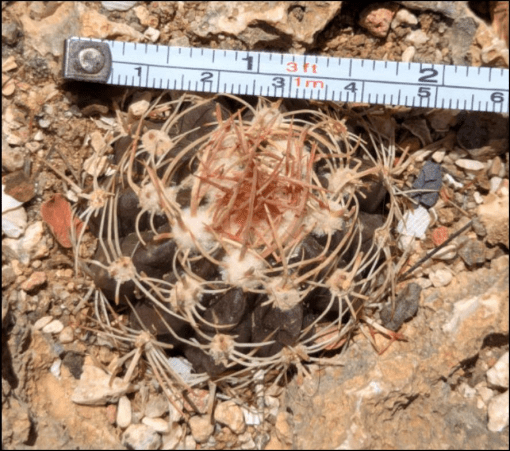
During last year’s edition, participants Linda van der Jagt and Sjors Verhagen photographed an unusual-looking barrel cactus during a hike. It caught the attention of specialists during the identification process, and it turned out to be a species never previously recorded. Earlier this month, the scientific paper was published — though the species won’t receive an official name until its first flowering is documented. Read more here: https://bioone.org/journals/bradleya/volume-2026/issue-44/brad.n44.2026.a14/A-remarkable-new-dwarf-Melocactus-from-the-Netherlands-Antilles/10.25223/brad.n44.2026.a14.full
The highlights from this year’s Challenge
Every year brings surprises, and 2026 was no different:
- Four deer were spotted — compared to just one last year
- Two tokay geckos were recorded for the very first time
- Among birds, the prikichi (Curaçao parakeet) overtook the iconic trupial as the most observed species
- Both the beyísima (an invasive species) and the divi-divi (our national tree) made the top 10
This year also saw more of the island mapped than ever before, including areas not previously visited during the Challenge — and more observations from Klein Curaçao than last year.
More than numbers
For co-organizer and Yu di Tera founder Cindy Eman, the results reflect something bigger than statistics: “We documented over 1,000 species — nearly as many as last year, and that’s despite a drought that puts the natural environment under real stress. People are also getting better at this: you can see the impact of the masterclasses and bioblitzes in the quality of the photos.”
And you don’t need to be a biologist to participate. As Femi Meaux, founder of Hòfi Cas Cora, puts it: “Just grab your (smart)phone, go outside, and see what you find.”
That spirit is exactly what the City Nature Challenge is built on.
What happens to the data?
The observations don’t disappear after the Challenge ends. Local institutions — including the Ministry of Health, Environment and Nature (GMN) — can use the data to track biodiversity trends, detect invasive species early, and support evidence-based nature policy. Every photo taken, every species identified, adds to a clearer picture of what’s living on this island.
Mark your calendar: 2027
The next City Nature Challenge on Curaçao takes place April 30 – May 3, 2027 — and preparations are already underway. Free masterclasses and bioblitzes will be organized in the lead-up, including at Hòfi Cas Cora.
Follow @citynaturechallengecuracao on Instagram and Facebook for updates, and start paying attention to what’s growing in your garden, flying over your roof, or crawling across your terrace. Chances are, it belongs in the database.
City Nature Challenge Curaçao is a volunteer initiative founded by Cindy Eman, Nadina Galle, and Femi Meaux, in collaboration with schools, NGOs, businesses, and government agencies. It is part of The Growing Network Foundation and represents Curaçao in the global City Nature Challenge, coordinated by the California Academy of Sciences and the Natural History Museum of Los Angeles County.

